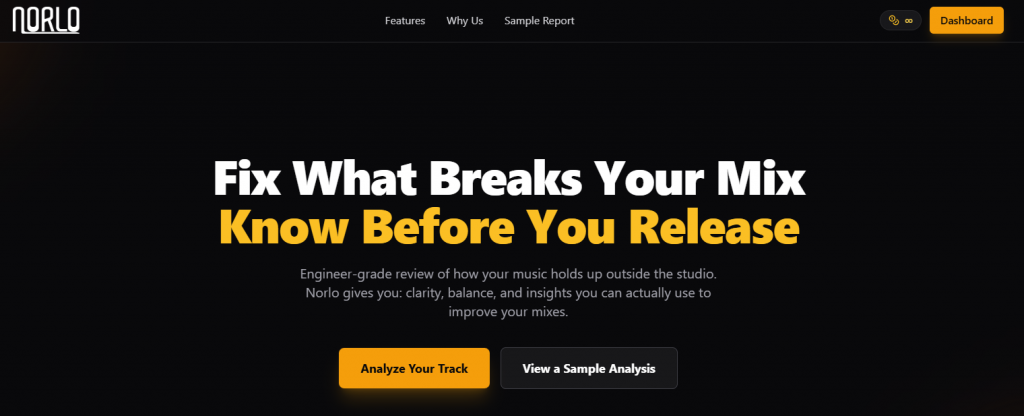
I developed Norlo as a SaaS platform between November and December of 2025. It’s still being launched as of now, January 2026.
Norlo started because existing mix analysis tools weren’t cutting it. They were either too vague, too bossy, or completely detached from how mixes actually sound in the real world. The idea wasn’t to build another auto-mixing tool. Those already exist and miss the point. Instead, the focus was on creating something that gives you professional-level insight without telling you how your music should sound.
The early work centered on getting the technical side right: spectral analysis, loudness measurements, dynamics, and critically, modeling how mixes translate across different speakers. That last part became a key distinction. Most tools compare your mix to some ideal frequency curve. Norlo looks at how your decisions hold up across actual listening contexts (phones, speakers, earbuds, studio monitors) and flags where things might fall apart. Genre awareness came into play early too, not to categorize for the sake of it, but to set realistic expectations around balance and frequency emphasis based on what listeners actually expect from different styles.
Once the engine was solid, the focus shifted to making the feedback useful. Through a lot of iteration, Norlo started delivering its analysis in a way that follows real mixing workflow: get your levels right, then EQ, then dynamics, then effects. One important shift was starting feedback from what’s working rather than just listing problems. It builds confidence while still being honest about what needs attention.
The interface evolved alongside the analysis engine. The goal was always to keep things simple. Clear scorecards, straightforward summaries, nothing overwhelming. Norlo isn’t trying to replace your ears or your engineer. Think of it more like having a second opinion from someone with experience, but faster and more consistent. That mindset shaped everything, including how we talk about it: no AI buzzwords, no hype, no algorithmic conformity.
What Norlo does now is what it set out to do from the start. It doesn’t generate music or finish your mix for you. It helps you understand how your work will translate from your studio to the speakers your audience actually uses, and gives you clear, prioritized steps to improve those odds.
Leave a Reply